
01
.
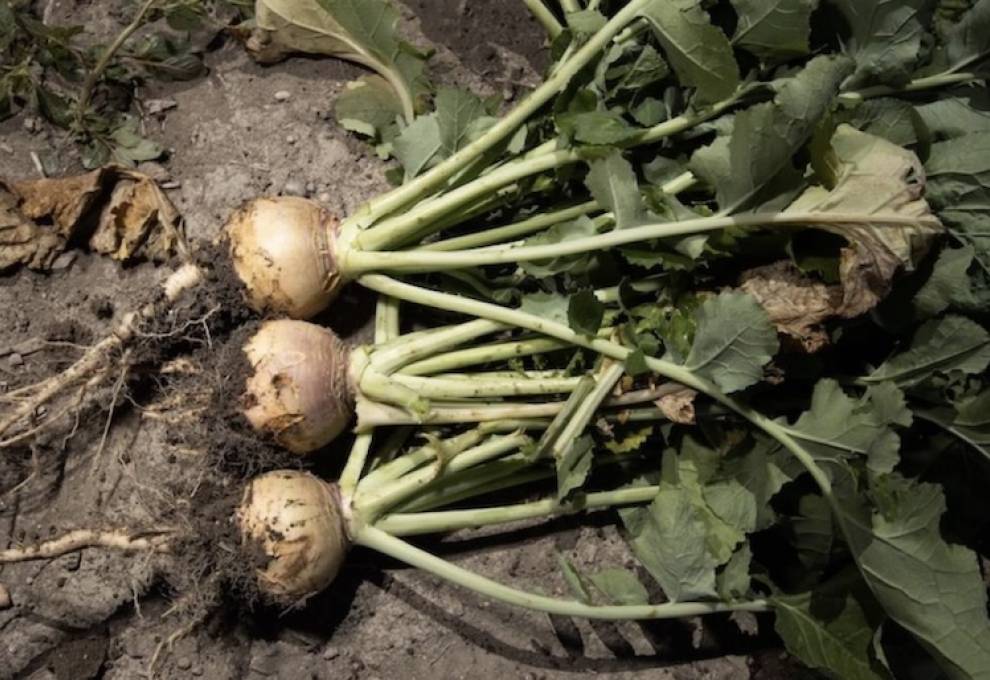
The Pest Management Regulatory Agency (PMRA) recently approved Emergency Use Registrations (EUR) for Cimegra and Successinsecticides for management of cabbage maggot on rutabaga in numerous provinces in Canada. These EURs for Cimegra and Successinsecticides on rutabaga can be used only in Ontario, British Columbia, Alberta, Québec, Nova Scotia, New Brunswick, Prince Edward Island, and Newfoundland and Labrador from May 21st, 2026 until May 20th, 2027 (Cimegra) and May 17th, 2026 until May 16th, 2027 (Success).
Cimegra and Success insecticides are labeled for management of insects on a wide range of crops in Canada. Plans are underway to submit provincial User Requested Minor Use Label Expansion (URMULE) requests with the hope for full registration in future field seasons. These EUR requests were initiated by participating provinces in response to the loss of chlorpyrifos applications in Canada following RVD2020-14 and the subsequent re-evaluation note REV2021-04 which created a lack of sufficient registered protective products to allow for effective protection from cabbage maggot on several crops in Canada, including rutabaga. This EUR was led by Québec in conjunction with other participating province’s provincial Ministries of Agriculture and their local growers’ associations.
The following is provided as an abbreviated, general outline only. Users should be making insect management decisions within a robust integrated insect management program and should consult the complete emergency use label before using Cimegra and Success insecticides.
Abbreviated instructions for Cimegra insecticide
Crop(s) | Target | Rate (mL product/ha) | Application Information | Pre-Harvest Interval (PHI) (days) |
Rutabaga
| Control of cabbage maggot | 250 | Apply 250 mL/ha1 of Cimegra insecticide post-planting as a drench banded spray, 10 cm on each side of the plant targeting the soil and base of plant to control cabbage maggot. For best results apply at peak egg laying. Use a minimum water volume of 1000 L/ha. DO NOT apply more than 2 applications per year. Allow a minimum of 10 days between applications. Monitor pest population and reapply if necessary once thresholds are reached. Optimum application timing is based on field scouting. Begin applications when adult activity is observed in or near the field.
1 1.9 mL/100 m of row for 76 cm (30”) row spacing. For a different row spacing, adjust the product rate using the following equation: (row spacing (cm) / 90) x 2.3 mL = mL per 100 m of row. | 40 |
NOTE: The use of Cimegra on rutabaga is intended only for domestic markets due to a lack of export MRLs being established in other trading partner countries. If exported, detection of residues on these crops could lead to rejection or destruction by the appropriate officials.
Abbreviated instructions for Success insecticide
Crop(s) | Target | Rate (mL product/ha) | Application Information | Pre-Harvest Interval (PHI) (days) |
Rutabaga
| Suppression of cabbage maggot | 273 - 546 | Optimum application timing is based on field scouting. Begin applications when adult activity is observed in or near the field. Apply Success in soil drench at the rate of 273 mL/ha to 546 mL/ha (131 g/ha to 262 g/ha a.i,). For 76 cm (30-inch) plant row spacing apply Success at 6 mL to 12 mL per 300 linear metres (1000 linear feet). Do not make applications less than 4 days apart. Apply a maximum of 2 applications. Do not apply more than 1.1 L/ha of Success per year. | 3 |
Follow all other precautions, restrictions, and directions for use on the Cimegra and Success insecticide labels.
For a copy of the emergency use label, Ontario growers may contact Josh Mosiondz, provincial minor use coordinator, OMAFA, Guelph (226) 971-3407, or Dennis Van Dyk, vegetable crops specialist, OMAFA, Guelph (519) 766-5337. Non-Ontario growers from participating provinces may contact their local provincial minor use coordinator or provincial crop specialist(s). Alternatively, you may contact your regional supply outlet, BASF Canada (Cimegra) and / or Corteva Agriscience Canada (Success) representatives, or visit the PMRA label site
Source: Josh Mosiondz, provincial minor use coordinator, Ontario Ministry of Agriculture, Food and Agribusiness April 23, 2026 news release
Standard (Image)
If latest news
Check if it is latest news (for "Latest News" page)
1 (Go to top of list)

