
01
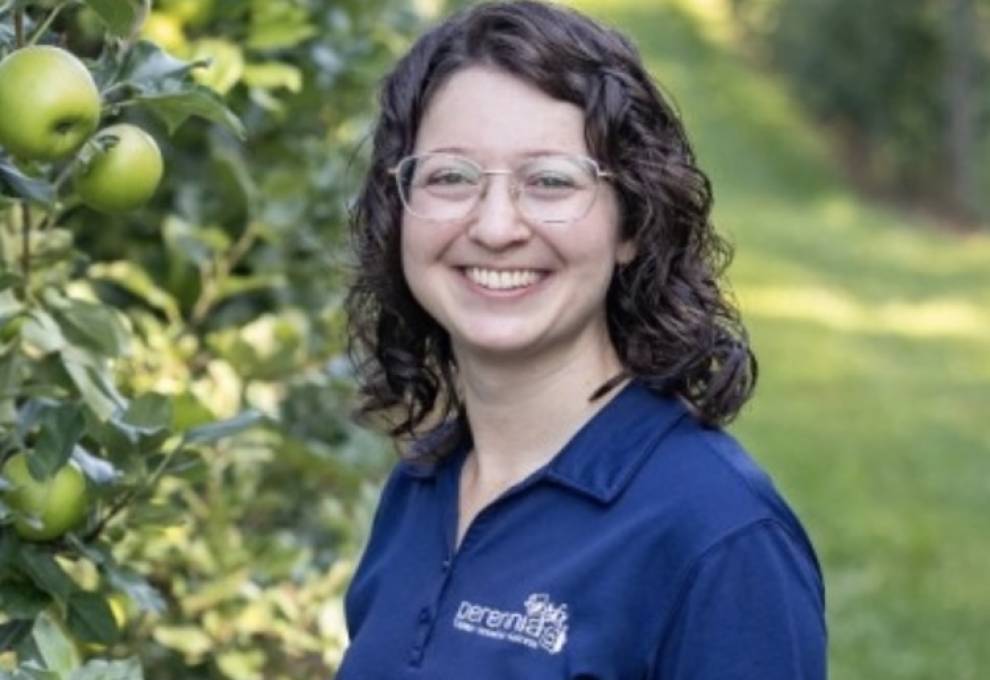
Michelle Cortens, Perennia tree fruit specialist.
The following review takes a deep dive into Nova Scotia’s 2025 apple growing season. Michelle Cortens, tree fruit specialist, Perennia, shared the following observations.
Apple scab
Above-average temperatures in early spring 2025 led to early maturing ascospores and consistently drizzly wetting periods produced infection events that occurred frequently at intervals of one week or less. Of the spores that were released during infection events, a heavy amount was capable of causing infection. This season a total of 10 primary infection events were recorded, which is similar to what has occurred in recent years. However, this year's infections were particularly long-lasting and presented frequent and heavy risk of infection. The event on May 19 was notable because it released 44 per cent of the total spore load.
Table 1: Summary of apple scab primary infection periods recorded in Kentville in 2025, based on the Modified Mills Table and assuming a green tip date of April 20.

Powdery mildew
The summertime dry, warm and humid weather conditions were conducive to powdery mildew. Newly expanding leaves on terminal shoots were frequently at risk of infection in midsummer. Susceptible varieties such as Cortland and Honeycrisp that were unprotected had plenty of infections on new leaf tissue. Buds are infected this year and will overwinter to cause infection pressure next year.
Fire blight
The first blossoms in the Annapolis Valley opened very rapidly around May 13-15 with early varieties in full bloom and later varieties at king bloom. Development was at a standstill during cold weather and then above-average heat pushed the end of bloom by around June 2. In general, infections were possible during the main bloom period on May 16 and May 29 with further infection risk periods on late flowering trees. Infections were variable due to variable rain patterns and in many situations wetting requirement might not have always been realized to cause infection. However, wetting events including rainfall and dew during high EIP periods were conducive to extensive bacterial infection, unless antibiotic protection was applied. New fire blight infections developed where protection was not achieved.
Harvest and fruit quality
Apple fruit maturity was a few days advanced or similar to historically early harvest dates. The recent trend has been for early harvest in conjunction with more growing degree days. Due to the drought, the average apple fruit size was small, leading to a lower total volume of saleable fruit and excluding fruit from the market that failed to meet market grade. Pears and stone fruit were also small.
Colour development varied greatly within and between farms. In general, colour development was slower than last year. Where tree stress was prominent, colour failed to develop or orange/yellow tones developed on Honeycrisp. Without the diluting effect of water, the soluble solids were much higher than usual.
Labour hours per bin were significantly higher than usual because 1) it takes longer to harvest small fruit, 2) marketable fruit were spatially distant, and 3) more decision-making was involved during picking to exclude undersized fruit.
Source: Perennia December 19, 2025 newsletter
Standard (Image)
If latest news
Check if it is latest news (for "Latest News" page)

