
01
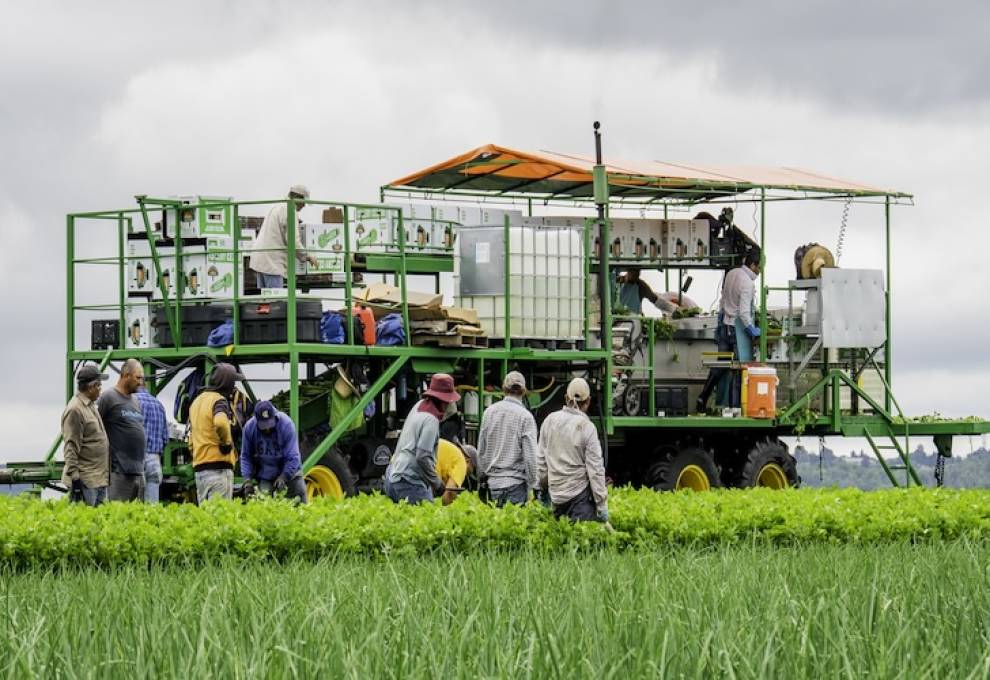
Celery harvest in the Holland Marsh.
The Greenbelt Foundation has released a new report as part of its Visioning the Future of the Greenbelt series, highlighting the Greenbelt’s role in securing a strong agriculture and agri-food system in Ontario. Considering its geography, interconnected system of working farms, concentration of major food industry clusters, and proximity to the largest consumer market in Canada, the Greenbelt is uniquely positioned to ensure Ontario’s self-reliance amid increasing global uncertainty.
Ontario’s Greenbelt in the Greater Golden Horseshoe region is a unique strategic asset, where domestic food security meets a trade corridor to the world. As we continue to prepare for global food production risks, increasing environmental pressures, as well economic and trade uncertainty, Ontario’s Greenbelt: The Key to Food Security in the Greater Golden Horseshoe report, authored by the Canadian Agri-Food Policy Institute (CAPI), outlines issues and opportunities related to the Greenbelt and Ontario’s agriculture and agri-food sector.
In Ontario, the agri-food system continues to be an engine of economic growth. In 2024 alone, it contributed over $50 billion to the provincial economy and accounted for one third of Canada’s total agri-food gross domestic product (GDP). The Greenbelt serves as a cornerstone of the sector, producing everything from beef cattle and oil seeds to fruits and vegetables; its high-value farmlands cannot be replicated in other parts of the province. Notably, Greenbelt farms generate 68% more revenue per acre than an average Ontario farm.
Together, these findings show that trade wars not only brought challenges but also uncovered the Greenbelt’s untapped potential. Tyler McCann, managing director, Canadian Agri-Food Policy Institute (CAPI), said: “Agriculture and food have always been important, but changing geopolitics, climate and economics make land the starting point for an increasingly strategic sector. Land-use decisions made today will have long-term impacts on Ontarians’ ability to eat, work, and live in a strong, productive, and thriving province.”
Source: Greenbelt Foundation March 30, 2026 news release
Standard (Image)
If latest news
Check if it is latest news (for "Latest News" page)
1 (Go to top of list)

