
01
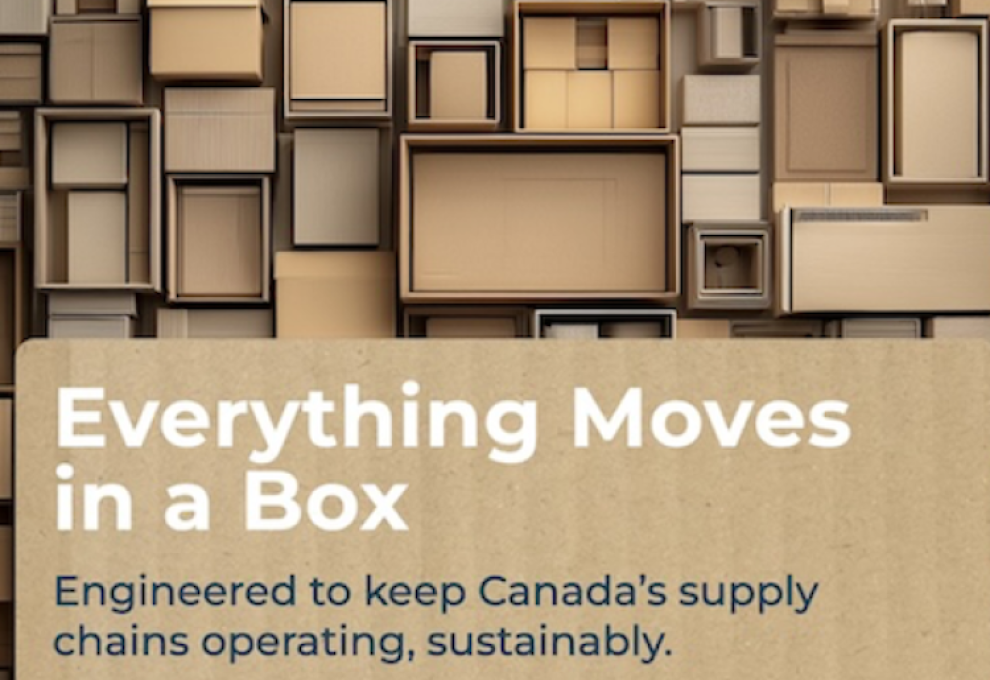
The Canadian Corrugated and Containerboard Association has a new website.
Virtually every product, from farms or factory floors to DCs, stores or front doors, passes through a box at some point along its journey. With that background, the Canadian Corrugated and Containerboard Association (CCCA) launches its redesigned website, offering a window into a sector quietly supporting the movement of goods, powering domestic supply chains, and advancing a sustainable, circular economy.
“Corrugated packaging is a critical but often overlooked backbone of Canada’s supply chains. This new website helps tell that story, highlighting how our sector supports economic resilience, adapts to changing market demands, and contributes to a circular, low-carbon future,” explains Serge Desgagnés, executive director, CCCA.
The site highlights how Canadian corrugated packaging leads the packaging sector through the adaption to e-commerce growth, shifting trade dynamics, and rising sustainability expectations, while underpinning domestic manufacturing resilience.
Corrugated packaging across Canada’s economy
Canada’s corrugated and containerboard sector operates through an integrated network of domestic mills and converting facilities, supporting consistent supply, shorter lead times, and resilience amid geopolitical discussions. The broader pulp and paper sector contributes approximately $25 billion annually to Canada’s GDP[i], and more than 27,000 jobs, with 10,000 of those coming from CCCA member companies, demonstrating its strong contribution to the Canadian economy.
As e-commerce and complex distribution networks expand, corrugated packaging remains central to how goods travel from picking or production to customers or consumers. Durable, lightweight, and versatile, corrugated boxes are used across sectors including manufacturing, retail, food, and logistics. With the sustained growth in online retail activity, the importance of adaptable packaging is key to this sector’s future.
Circularity and sustainability in action
Canada’s corrugated packaging system is underpinned by a long-established domestic circular economy. Used boxes are recovered through a robust network of municipal Blue Box programs and commercial collection, recycled, and remanufactured into new packaging, often multiple times. High recovery rates help ensure a steady supply of recycled material while offsetting landfill waste.
The CCCA website also connects stakeholders to credible sustainability information via the Paper and Paperboard Packaging Environmental Council (PPEC), which provides data on recycling performance, circularity outcomes, and sustainable fibre sourcing.
The CCCA’s new website provides:
· Resources on recycling, circularity, and material performance
· Updates on policy and regulatory developments
· Information on Canada’s corrugated packaging capabilities
· Connections to packaging expertise and solutions nationwide
· Access to credible sustainability data via PPEC
Link here: https://cccabox.org/
Source: Canadian Corrugated and Containerboard Association April 27, 2026 news release
Standard (Image)
If latest news
Check if it is latest news (for "Latest News" page)
1 (Go to top of list)

