
01
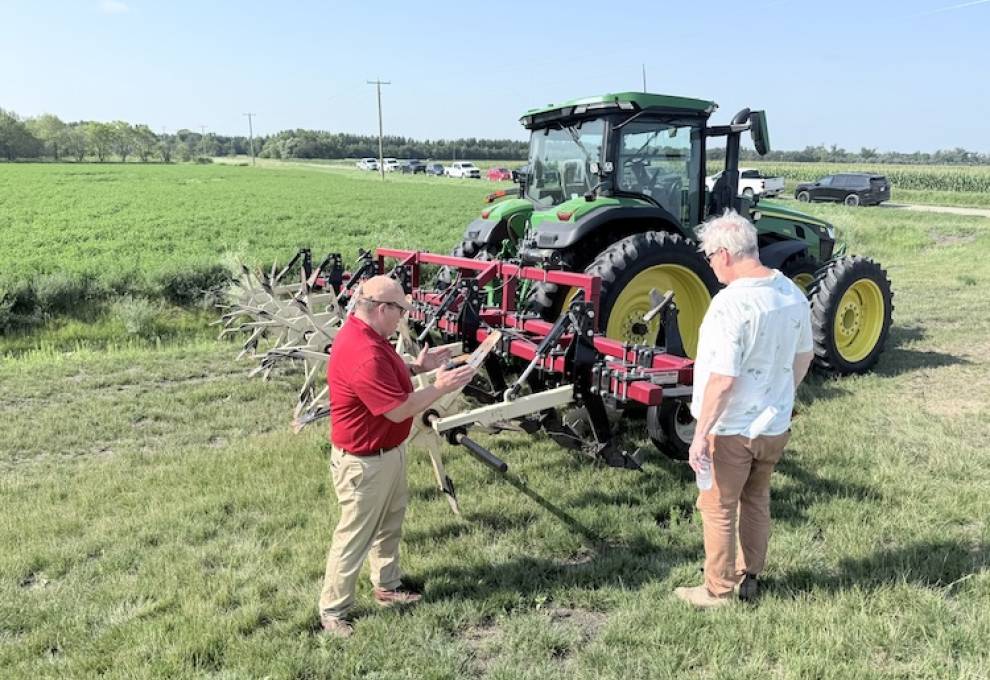
The Potato Sustainability Alliance welcomed members and partners to a recent tour that highlights the critical connection between sustainable potato production and watershed health.
The Potato Sustainability Alliance (PSA) recently welcomed members and partners to the Lake Winnipeg Basin (LWB) Project Tour, an immersive field experience highlighting the critical connection between sustainable potato production and watershed health. The tour brought together growers, researchers, agronomists, government representatives, conservation organizations, and food industry partners to explore innovative, science-based practices that improve water quality while maintaining productive agricultural operations.
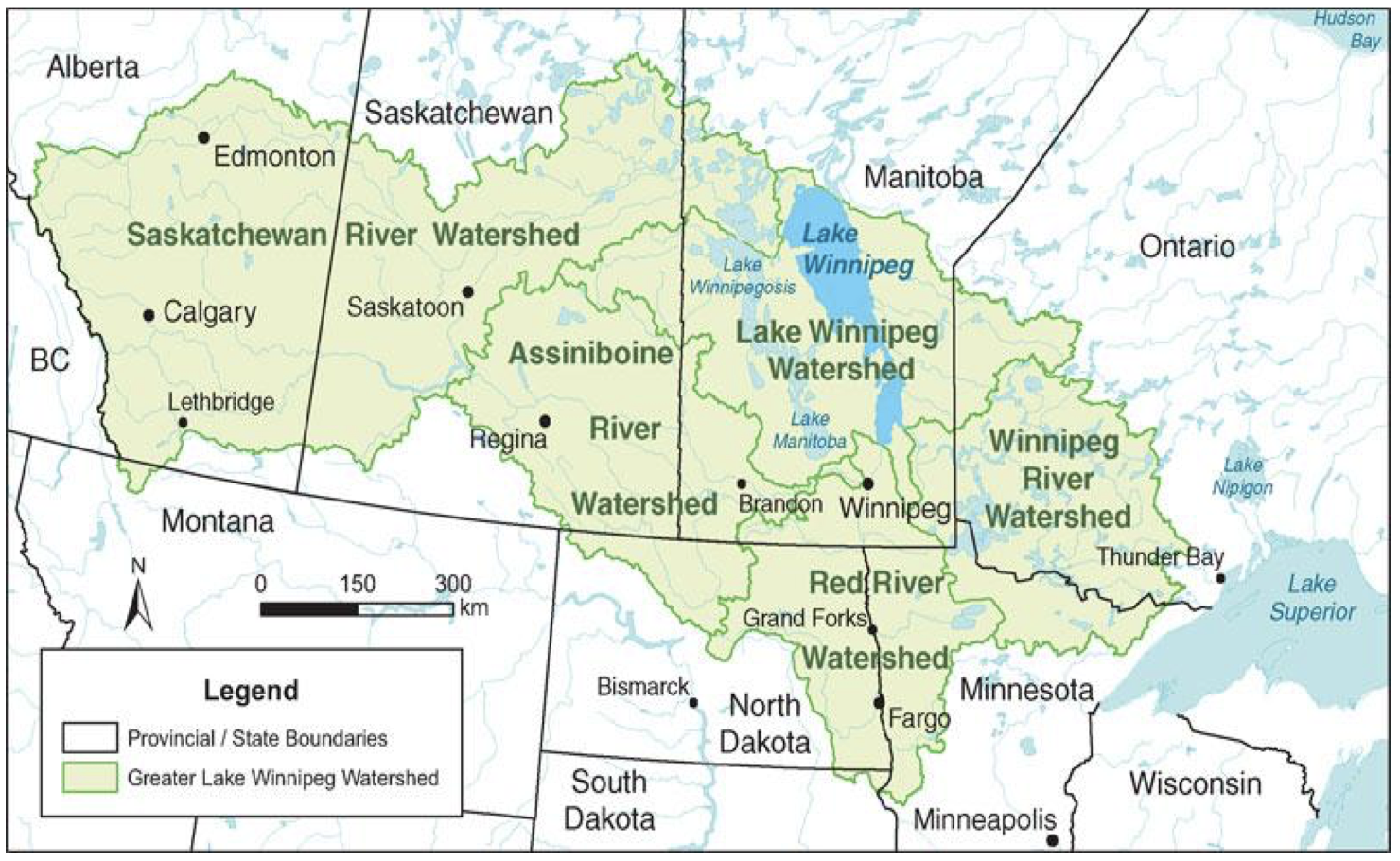
Figure 1: The Lake Winnipeg Basin (Western Canada Wilderness Committee, 2008) from: https://www.iisd.org/system/files/publications/water_quality_trading_lake_wpg_basin.pdf
Held across southern Manitoba, the tour provided participants with an up-close look at collaborative conservation efforts taking place throughout the Lake Winnipeg Basin. Stops included the Stephenfield Lake Reservoir, regional irrigation infrastructure, Corduroy Plains, Blumengart Colony, and WJ Siemens Farming Company, where attendees examined real-world examples of sustainable farming practices and watershed management.
Throughout the day, participants explored topics including phosphorus management, irrigation efficiency, manure management, shelterbelts, precision agriculture, yield monitoring, and nutrient removal through biomass harvesting. Discussions emphasized the importance of collaboration across the agricultural value chain to address shared environmental challenges while strengthening farm productivity and resilience.
Here are several key takeaways:
• Farmers are already advancing stewardship on the ground. The tour showcased practical practices already being implemented to protect water, improve soil health and build landscape resilience.
• Seeing sustainability in action matters. On-farm demonstrations and farmer-to-farmer learning make sustainability tangible, helping participants better understand what practices look like in real-world conditions.
• Sustainable practices must work for the farm. Effective solutions need to deliver environmental benefits while also making agronomic and economic sense for producers.
• Local action can create broader impact. Individual farm practices, when adopted across a watershed, can contribute to improved water quality, soil health and long-term landscape resilience - while continued storytelling and engagement can build public understanding and trust.
• Collaboration strengthens watershed solutions. Bringing farmers, industry, researchers, government, Indigenous communities and the public together creates shared understanding and helps connect research and innovation with practical on-farm solutions.
The Lake Winnipeg Basin is one of North America's most significant freshwater watersheds, making collaborative efforts to reduce nutrient losses and improve water quality increasingly important. Through projects such as this, PSA continues to support practical, farmer-led sustainability initiatives that generate measurable environmental outcomes while supporting a resilient potato industry.
Source: Potato Sustainability Alliance August 13, 2026 news release
Standard (Image)
If latest news
Check if it is latest news (for "Latest News" page)

