
01
.
In a recent ON Fruit posting, OMAFA specialists Erica Pate, Jason Lemay and Katie Goldenhar are spotlighting a gap in information about blueberry anthracnose.
Blueberry anthracnose, primarily caused by Colletotrichum fioriniae, causes fruit rot, and to a lesser extent blossom rot and shoot blight. The fungus overwinters on old fruiting spurs and infected twigs and spreads in the spring and summer by rain and wind to infect blooms and fruit. Fruit infections remain latent, and symptoms often show up after harvest once berries are ripe.
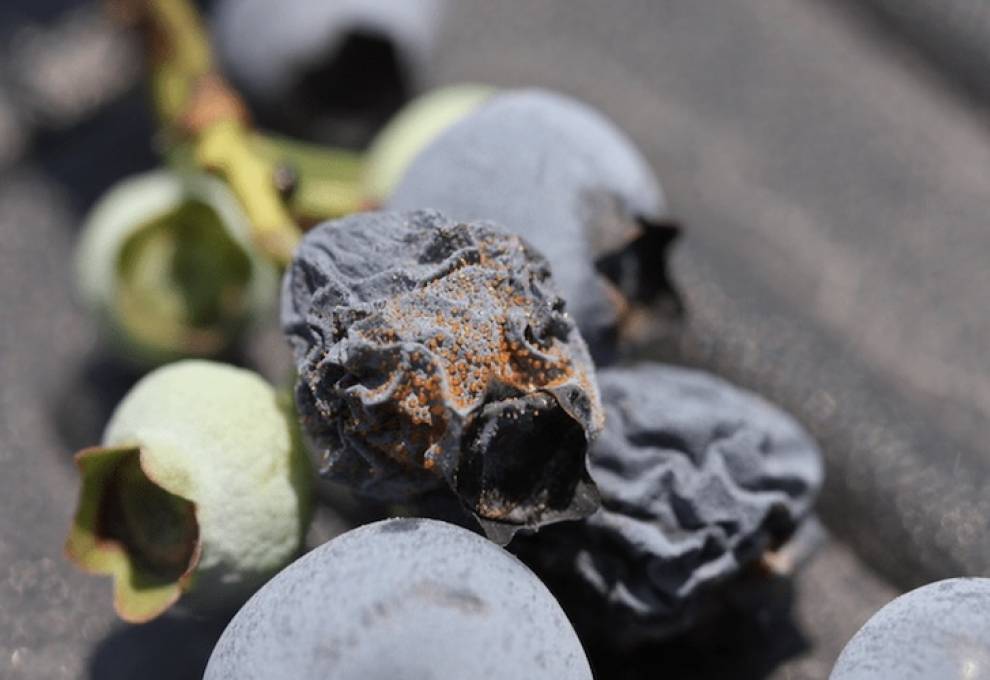
Infected fruit may begin to soften and shrivel on the bush near harvest time and sticky, orange or salmon-coloured spore masses (Figure 1) will develop on the fruit, reducing yields, marketability, and shelf-life. While fruit rot is the biggest issue, anthracnose can also cause blossom rot and shoot blight. Shoot blight is more common on rapidly growing shoots and on more susceptible cultivars including Bluecrop.
In a 2023 survey of twig blights in Ontario highbush blueberries, 14 per cent of symptomatic shoots were identified as Colletotrichum fioriniae. Twig infections can serve as inoculum for fruit rot infections.
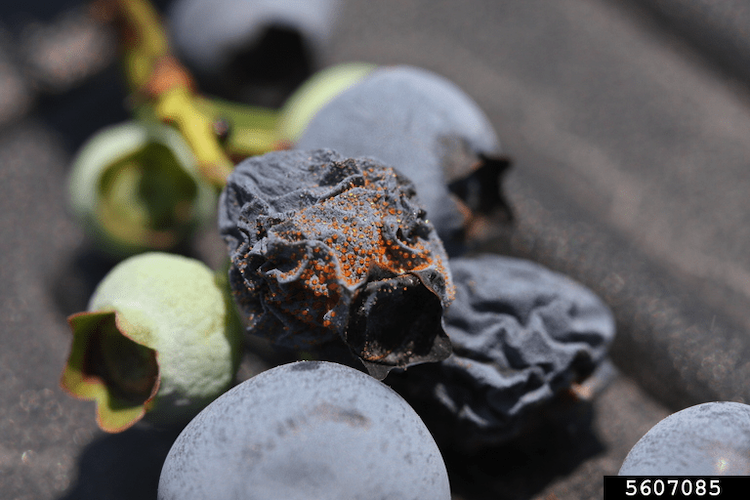
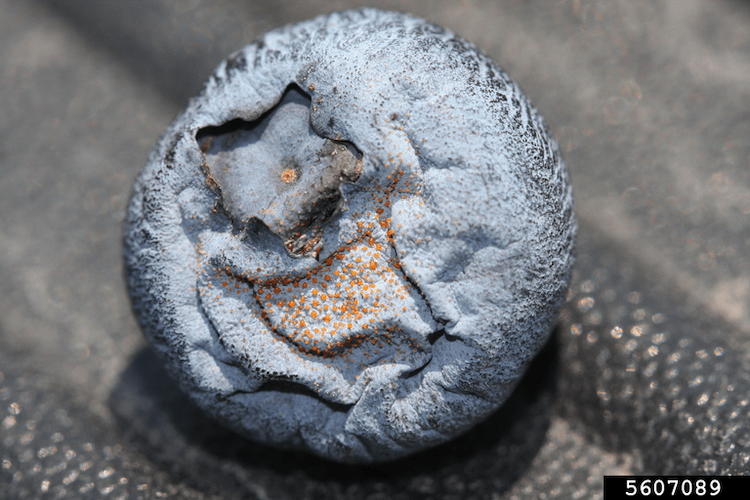
Figure 1: Blueberry anthracnose (Gerald Holmes, Strawberry Center, Cal Poly San Luis Obispo, Bugwood.org).
Most fruit infections occur during bloom to green fruit, especially when weather is warm and wet; there needs to be a minimum of 8 h of leaf wetness at 25°C for infection. Longer leaf wetness is required for infection at lower temperatures. Infections remain latent until the fruit begins to ripen.
Like disease management on other crops, fungicide resistance is also a concern for anthracnose management on blueberries. Colletotrichum fioriniae isolates collected from blueberries in Michigan have been confirmed resistant to group 11 fungicides (Adaskaveg et al., 2025) as well as multiple other U.S. states (Oliver, 2024). No surveys have investigated the presence of fungicide resistance in blueberry anthracnose in Ontario but for 2026 and 2027, OMAFA is leading a survey for detection of the G143A mutation in Ontario blueberry anthracnose.
If you are a blueberry grower and are interested in participating in this survey, please contact Katie Goldenhar, Pathologist- Horticulture (katie.goldenhar@ontario.ca).
Source: OMAFA July 8, 2026 ON Fruit posting
Standard (Image)
If latest news
Check if it is latest news (for "Latest News" page)
1 (Go to top of list)

