
01
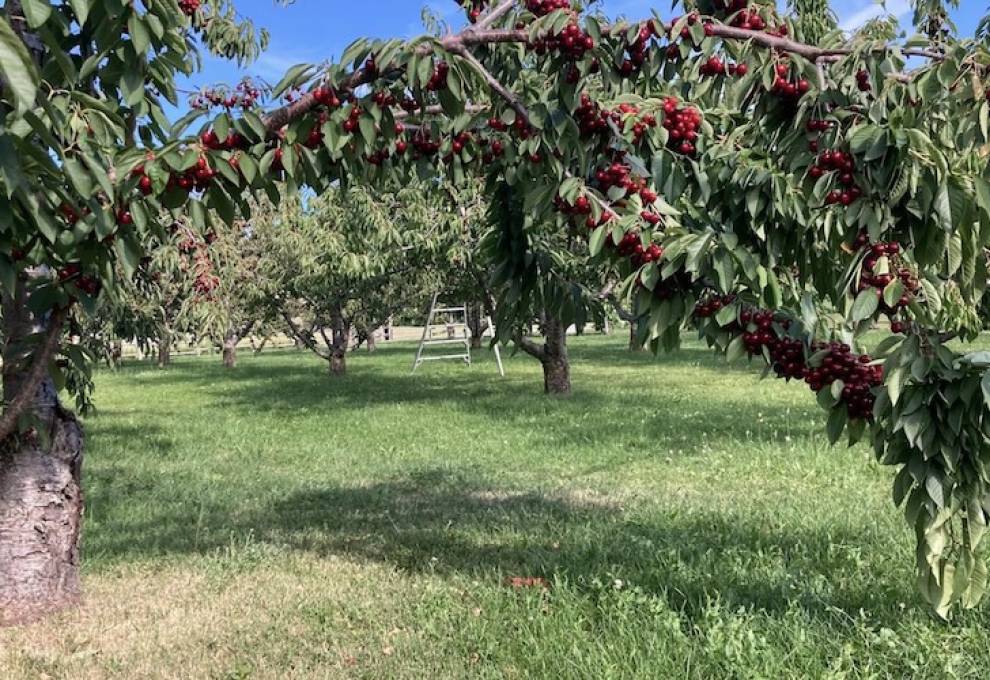
BCFGA is calling for an immediate orchard survival plan following Greater Vernon Water’s announcement of severe agricultural water restrictions.
The British Columbia Fruit Growers’ Association (BCFGA) is calling for an immediate orchard survival plan following Greater Vernon Water’s announcement of severe agricultural water restrictions.
BCFGA recognizes that Greater Vernon is facing serious water shortages. Growers are not asking water managers to allocate water that does not exist. They are asking that the remaining supply be managed in a way that protects long-term food production and prevents avoidable loss of mature orchards.
The Greater Vernon area has approximately 2,100 acres of apple and cherry orchards. BCFGA estimates that widespread orchard loss could result in more than $250 million in direct losses, with broader regional impacts exceeding $300 million when lost production, labour, packing, trucking, suppliers and related businesses are considered.
“Growers understand the seriousness of the drought,” said Deep Brar, president, BCFGA. “But a 70 per cent reduction in agricultural water is not just a crop production issue. At that level, this becomes an orchard-survival issue.”
Greater Vernon’s normal agricultural allocation is approximately 550 millimetres of water per season. A 70 per cent reduction leaves approximately 165 millimetres.
“That number should concern everyone,” said Brar. “Peer-reviewed apple research has documented severe drought impacts and agronomic death in mature apple trees at a comparable seasonal water-use level. This does not mean every orchard will respond the same way, but it clearly shows these restrictions are entering a danger zone for perennial crops.”
BCFGA says orchards must be treated differently than lawns, landscapes or annual crops.
“A lawn can go dormant and recover. An annual crop can be replanted next year. A mature apple or cherry orchard is long-term, food-producing infrastructure,” said Brar. “If those trees die, the impact is measured in years, not weeks.”
BCFGA is urging Greater Vernon Water, local governments, provincial agencies and growers to use the June 10 agricultural water-user meeting to develop a practical mitigation plan. The association is seeking answers on four issues:
- How much water will remain available to each agricultural property?
- What crop science analysis was used to assess orchard survival under the restrictions?
- What options exist to prioritizing limited water toward keeping perennial crops alive?
- What provincial support will be available if water shortages cause permanent orchard loss?
BCFGA is also urging other Okanagan water suppliers that may be considering similar restrictions to engage early with growers, the Ministry of Agriculture and Food, and affected commodity groups before decisions are finalized. Early coordination may help keep losses at the crop level, rather than allowing water shortages to become permanent orchard-level damage.
The association is also asking that production insurance and business risk management staff be briefed now so that the provincial government has early visibility on producer losses, program exposure and the financial risks facing affected farms.
“Growers are ready to do their part,” said Brar. “They have invested heavily in drip irrigation, micro-sprinklers, soil moisture monitoring and precision irrigation scheduling. What they need now is transparency, technical analysis and a coordinated plan to protect food-producing orchards wherever possible.”
Source: British Columbia Fruit Growers’ Association June 5, 2026 news release
Standard (Image)
If latest news
Check if it is latest news (for "Latest News" page)

