
01
.
At a time of rising economic insecurities and global uncertainties, Greenbelt Foundation’s new economic impact report, authored by Ernst & Young LLP (EY Canada), highlights the regional and provincial economic contribution of sectors supported by the Greenbelt. It reveals that the Greenbelt generates $17 billion in Ontario’s Gross Domestic Product (GDP) and sustains more than 247,000 full-time jobs.
The report highlights prevailing economic trends, provides a breakdown of key sectors’ economic contributions, and elevates strategic opportunities enabled by the Greenbelt’s unique strengths and economies.
Key Findings
- - Greenbelt-dependent economic activity now generates $17B of Ontario’s overall GDP while sustaining 247,000 full-time jobs across primary and secondary sectors.
- - Since the Greenbelt Foundation’s earlier economic impact assessment (2020), the Ontario Greenbelt has seen a 12% increase in province-wide economic contributions, adjusted for inflation, and a 17% increase in employment opportunities, underscoring its growing economic value across the region.
- - Agriculture, forestry, and fishing sectors have seen the largest GDP increase of 29%.
- - Greenbelt-linked economic activities generated almost $6 billion in government revenues, representing a 17% increase compared to the 2020 study.
By mid-century, the regional economy of the Greater Golden Horseshoe, where the Greenbelt is located, is projected to grow to support 14.8 million people and seven million jobs.
“As the region evolves, the Greenbelt will continue to be a key economic driver by supporting jobs across sectors, protecting high-value agricultural lands and vital water resources, while providing critical ecosystem services and enhancing opportunities for recreation and tourism,” said Edward McDonnell, CEO, Greenbelt Foundation.
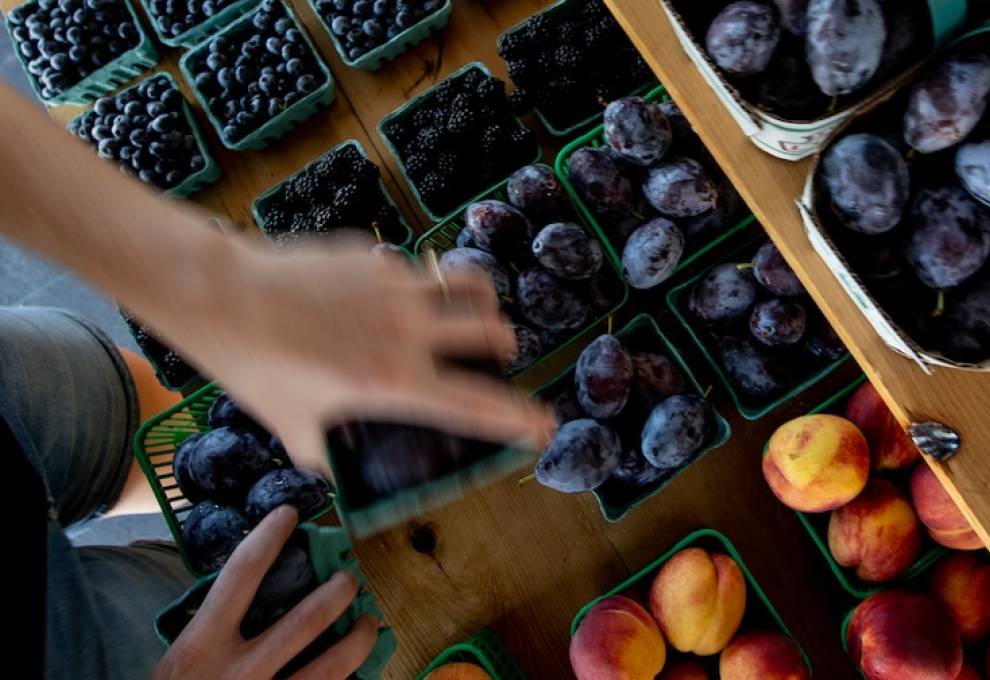
In particular, with more than 4,000 farms and highly productive soils, the Greenbelt is home to over a half of Ontario’s fruit acreage, including more than 80% of the province’s peaches, plums, prunes, apricots, and grapes. Its farms generate 68% higher revenue per acre than an average Ontario farm, ensuring food security and agricultural resilience in the region. In addition to this, the Greenbelt drives tourism and recreation revenues by offering a near-urban network of trails, cycling routes, river corridors, and green spaces. Its natural systems also deliver clean air, protect water quality, reduce flood risks, mitigate climate change impacts, and support communities’ physical and mental well-being.
Margaret Zafiriou, senior research fellow, Canadian Agri-Food Policy Institute (CAPI): “The Foundation’s report reinforces findings from CAPI’s recent research on the importance of the Greenbelt to food security in the Greater Golden Horseshoe. As Ontario faces continued population growth, climate change impacts, and supply-chain uncertainty, protecting the Greenbelt’s agricultural lands is essential to maintaining regional food production capacity and building a more resilient agri-food system.”
“As we look to build the Fresh Coast Economic Corridor from Lake Superior to the Gulf of the St. Lawrence, healthy watersheds are key to supporting our vision and sustaining pivotal sectors such as agriculture, tourism and recreation, manufacturing, and emerging blue economy opportunities across Ontario and throughout the Great Lakes and St. Lawrence River Region,” said Jon Altenberg, president and CEO of the Great Lakes and St. Lawrence Cities Initiative. “The Greenbelt demonstrates that protecting natural and freshwater systems is not only an environmental priority, but an economic one as well.”
Source: Greenbelt Foundation June 22, 2026 news release
Standard (Image)
If latest news
Check if it is latest news (for "Latest News" page)
1 (Go to top of list)

