
01
.
The kid gloves worn to micro-manage and tightly regulate agricultural drone use in Canada are coming off – and not a minute too soon.
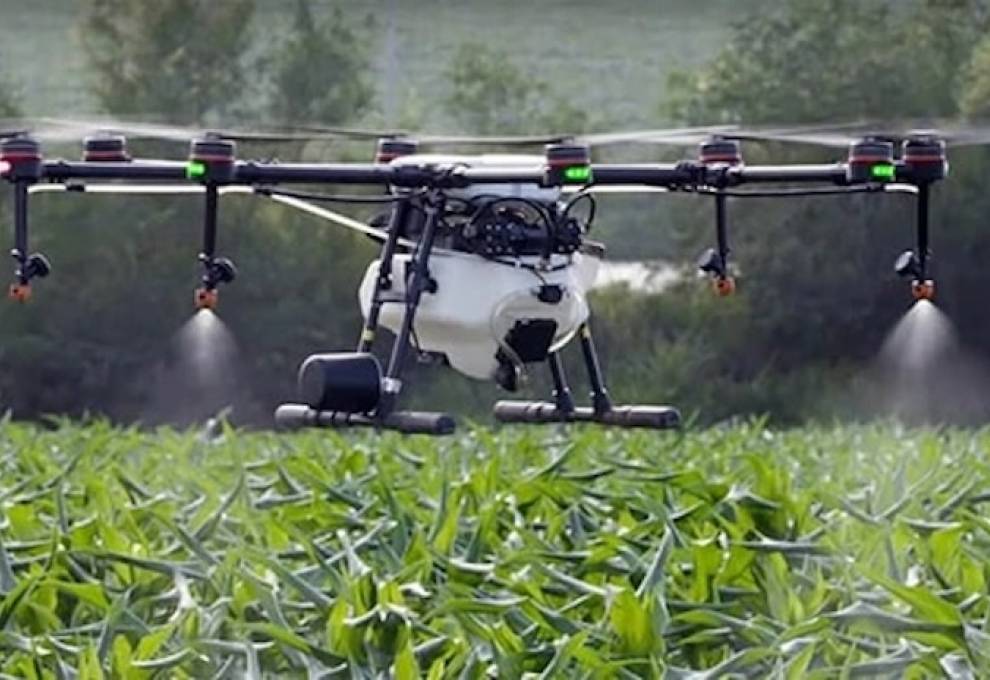
A 30-day consultation by Health Canada opened in February 2026 to consider permitting drone operators to use the machines to apply pest control products, such as fungicides, already registered for conventional aerial application.
Given the track record of such consultations and their overseers (i.e., Health Canada’s Pest Management Regulatory Agency), you’d expect a painfully sluggish process. And you’d be frustrated, but not surprised, if the regulators decided they needed yet another consultation before making up their minds.
But the wind of change is finally blowing in drones’ favour.
Producers’ discontented voices over unresponsive government agencies are being heard in Ottawa by a government eager to prove it means business and wants to support greater competitiveness -- Agriculture and Agri-Food Canada research cuts aside. At winter meetings in the nation’s capital, little doubt was left that the federal Liberals were pushing bureaucrats to take a more business-like approach to regulatory affairs – meaning, speed up the process.
That’s a turning point. Canada has long prided itself in having an exemplary, watertight and globally unparalleled regulatory system. In the early days of biotechnology, that’s why activists wanted to make headway here against it – getting uber-careful, plodding Canadian regulators to go thumbs down on a new product or process would give it a black eye globally.
Fast forward to 2026 though, and the world is in a different place. Jobs losses have climbed, the U.S. is threatening our sovereignty, and there’s a new war in the Middle East. A drone now represents more than aerial application technology: rather, it’s a poster child for competitiveness, not to mention for defense.
Farmers in countries that compete with Canada, particularly the U.S., have had their regulatory agencies look at drone applications in agriculture, and given them the green light. Those producers are enjoying the environmental and economic pluses of drones. So why not Canada?
That’s a good question, says Paul Van den Borre of Burgessville, Ontario, an experienced drone applicator with Eco+ who uses drones for plot work with foliar micronutrients.
“Rule-wise, not being on the same playing field as our competitors is like going into battle with one arm tied behind your back. It's not only a matter of being competitive with the U.S., but also with Brazil and others.”
However, he says because of stepped-up field tests with drones over the past 18 months by chemical and equipment manufacturers, as well as experience from other countries, a huge body of evidence has been amassed that has raised the level of confidence in drone-based applications.
“A lot of questions have been answered about drone applications,” he says. “Drones are really just another tool in the toolbox.”
Organizations such as CropLife Canada agree. “Drone application for crop protection products has the potential to improve the efficiency and sustainability of Canadian farmer operations,” it says. “At a time when Canadian agriculture is poised to deliver significant economic and food security gains for the country, [we] continue to advocate for pragmatic, risk-based approaches to regulation that enable innovation and drive competitiveness while maintaining high standards for health and safety.”
The latest wrinkle involves China. American producers are reeling after the Federal Communications Commission in December 2025 banned new foreign-made drones and their critical components. According to the commission, alien machines pose “unacceptable risks to the national security of the United States and to the safety and security of U.S. persons.”
China is a world leader in drone production. Given the new agreement for cooperation between China and Canada, including canola and electric cars, could drones be an element in upcoming trade negotiations? And drones are just the tip of the iceberg when it comes to electric vehicles on farms. Bugs need to be worked out, but technology is marching forward, as are China-Canada relations.
And finally, there’s a realistic matter at hand: producers aren’t waiting for Ottawa’s blessing to use drones. “PMRA approval might be legitimizing what’s already happening,” says Van den Borre. “It’s time move ahead.”
Standard (Image)
If latest news
Check if it is latest news (for "Latest News" page)
1 (Go to top of list)

