
01
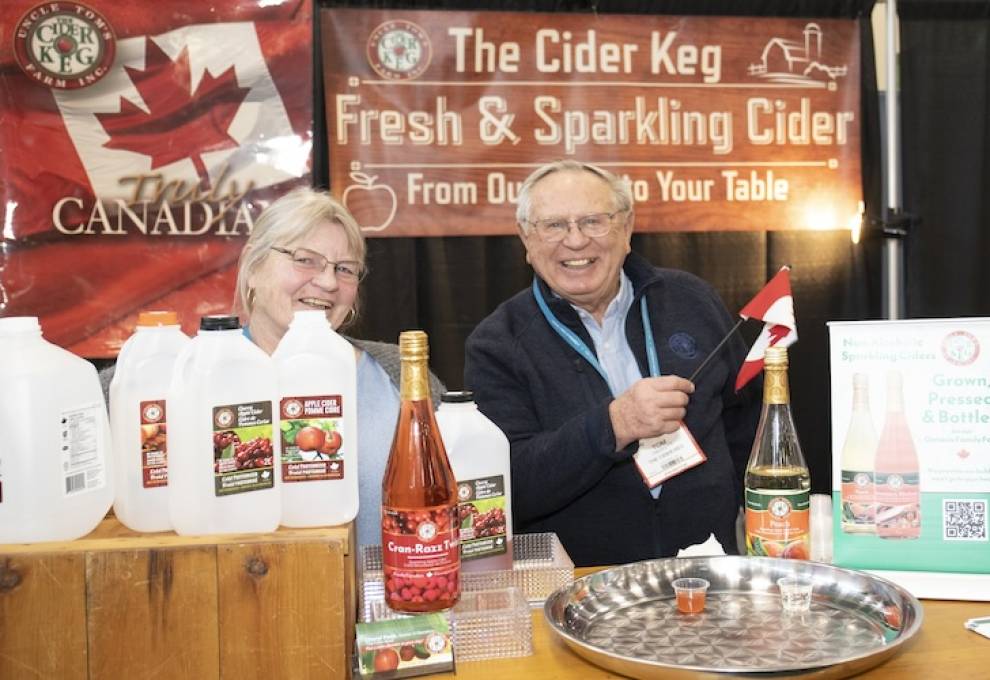
The Cider Keg, Vanessa, Ontario produces sparkling ciders that have broad distribution across southern Ontario. Here, Tom Haskett and his assistant showcase their wares at the 2025 Ontario Fruit and Vegetable Convention.
For a long time, our Canadian food and beverage industry has been in the shadow of the U.S. industry. The U.S. market was 10X bigger and many products developed or produced in the U.S. would make their way to Canadian shelves. When products produced in Canada succeeded, the natural next step was to export to the U.S. The market was relatively easy to access; we had a free trade agreement and logistics were well established.
A lot has changed. 2025 was a tumultuous year, when our biggest trading partner decided to change the relationship. Access to the market is more challenging and the volatility in policies has many people perplexed. Oversight of food production and processing is changing in the U.S. and costs are fluctuating with tariffs going up and down. The future of the Canada United States Mexico (CUSMA) free trade agreement is uncertain, even with dozens of U.S. business associations lobbying for the status quo.
As we shift to develop domestic and new export markets, we should showcase the benefits of Canadian food and beverage to the world. Recently I have had calls from different parts of the world because people want to do business with dependable producers who will produce excellent, safe products.
The first priority is to ensure consumers and customers understand the products are Canadian. Do not assume they know. Packaging and master cases need to be clear about country of origin. Do not just meet the regulatory requirements, be loud and proud. If you are exporting, the Canada Brand is becoming recognized around the world. The more producers and processors use it, the faster the awareness will grow. There are a lot of resources from Agriculture and Agri-Food Canada to help implement this in your business.
Reinforce the benefits of buying Canadian products. The benefits to the consumers and customers, not your business. We have access to very good quality raw materials and ingredients. Our oversight for food safety can be a challenge but, in the end, it does reduce a lot of risks for buyers. CanadaGAP and other food safety initiatives ensure we produce food that is as safe as any in the world. Canada has a lot of regulatory oversight to protect workers – a benefit to be communicated to some buyers. Make sure your business is compliant and reinforce the efforts of your employees in the products you produce. Consumers and customers want to know and it is our job to educate them about what happens in Canada, to ensure food is safe and produced properly.
In the calls I have received, I’ve noted that potential clients want to align with values. They believe they will find this with Canadian producers and processors. This is an opportunity that will pay dividends when people do live up to these expectations. One bad experience can lead to people in other markets to assume all businesses are the same. We need to get a fair price for the products we produce. We also need to be good to do business with.
With a lot of relationships changing the food industry, Canadian producers and processors must under promise and over deliver. Now is the time to reinforce our reputation for meeting and exceeding expectations. That might take some extra focus with the first few orders until both businesses in the supply chain have confidence in each other.
Now is the time to explore new markets. It takes considerable effort to develop relationships, products and logistics. Given our growing season, it might take years to provide sample products and gain the confidence of buyers. There is support for producers trying to develop new export markets in Europe, for example. Fruit Logistica comes to mind. Held in Berlin, Germany from February 4-6, 2026, it will host exhibitors from 90 countries. Look for other people trying to access the same markets. There could be synergies with logistics and local market knowledge.
Canadian consumers continue to look for Canadian products. Work with your domestic customers to ensure you are producing enough to meet demand. It is possible they might have been importing product in your category and would prefer to shift all of the production to Canada. A good example is the Loblaw Small Supplier Program which featured several products at its booth at the Royal Agricultural Winter Fair. Sunshine Farms’ dill pickles are now featured in the program.
Producers and others in our industry need to provide input when asked and push to define a great Canadian industry. A brand is so much more than a logo. It is reinforced every time a consumer crunches a pickle or sips a sparkling cider.
Excellent quality raw materials, rigorous food safety oversight and people who are dependable and fair to do business with could be the foundation for the reputation of Canadian products throughout the world.
Standard (Image)
If latest news
Check if it is latest news (for "Latest News" page)
1 (Go to top of list)

