
01
.
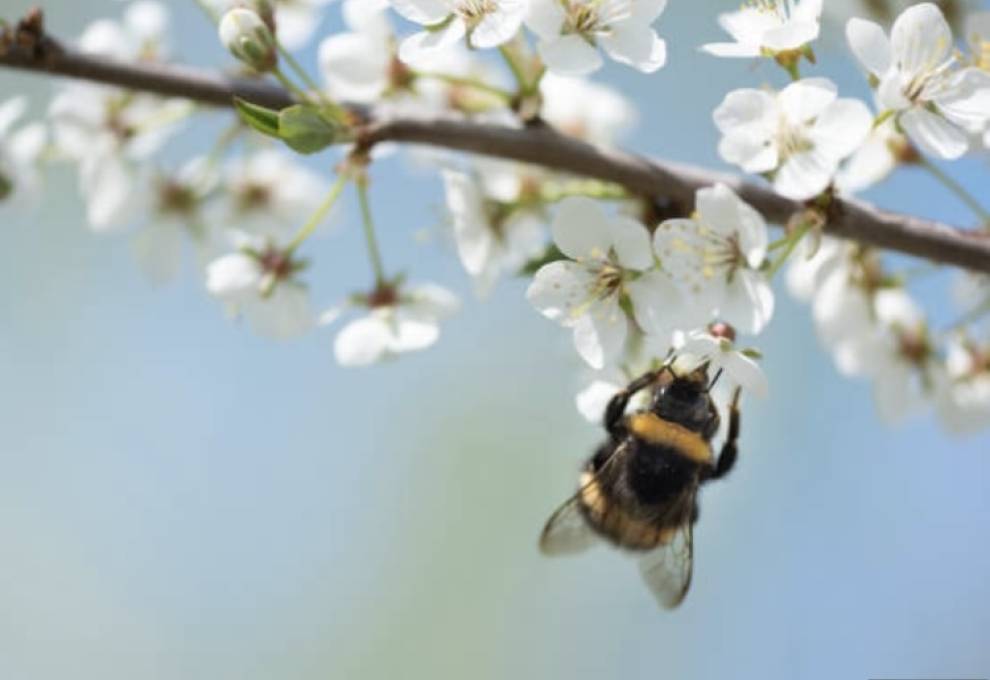
Early in the season, lower temperatures and unpredictable weather conditions often limit the availability and activity of naturally occurring pollinators and honeybees. In contrast, bumblebees remain active and effective under cooler and more unsettled conditions, making them a more reliable pollination solution during this critical period.
According to Jorden van de Walle, product manager for pollination at Biobest, this reliability is particularly important for crops with brief flowering periods. Almond trees typically bloom for just two to three weeks, while cherries may flower for as little as one to two weeks. To maximize yield and fruit quality, growers need a strong and immediately effective pollinator presence during this narrow window.
In March 2025, a trial was conducted in an open-field cherry orchard in Izmir, in Turkey’s Ege region, to evaluate the impact of introducing Biobest outdoor bumblebee hives (Bombus terrestris).
The cherries were being grown for the export market, where larger fruit sizes command a premium price per kilogram, while smaller fruit - that fails to meet export standards – is sold domestically at significantly lower returns.
The three-week trial compared a 0.5ha control plot, containing 375 trees reliant on natural pollination, with a 1ha trial plot of 800 trees supported by 10 bumblebee hives per hectare. Data collected per plot demonstrated clear performance improvements in the bumblebee-serviced orchard. Fruit height increased by four per cent, fruit width by seven per cent, and average fruit weight by 13 per cent, rising from 6.4 grams to 7.2 grams.
“As a result of the larger fruit size, the number of cherries per kilogram fell by 16 per cent, from 172 to 145 fruits, indicating a superior calibre more suited to export markets,” says van de Walle. “Growers can get a better price per kilogram for larger cherries, so the bumblebee pollination in the trial resulted in an increase of 12 per cent in profit.”
Source: Biobest March 2, 2026 news release
Standard (Image)
If latest news
Check if it is latest news (for "Latest News" page)
1 (Go to top of list)

