
01
.
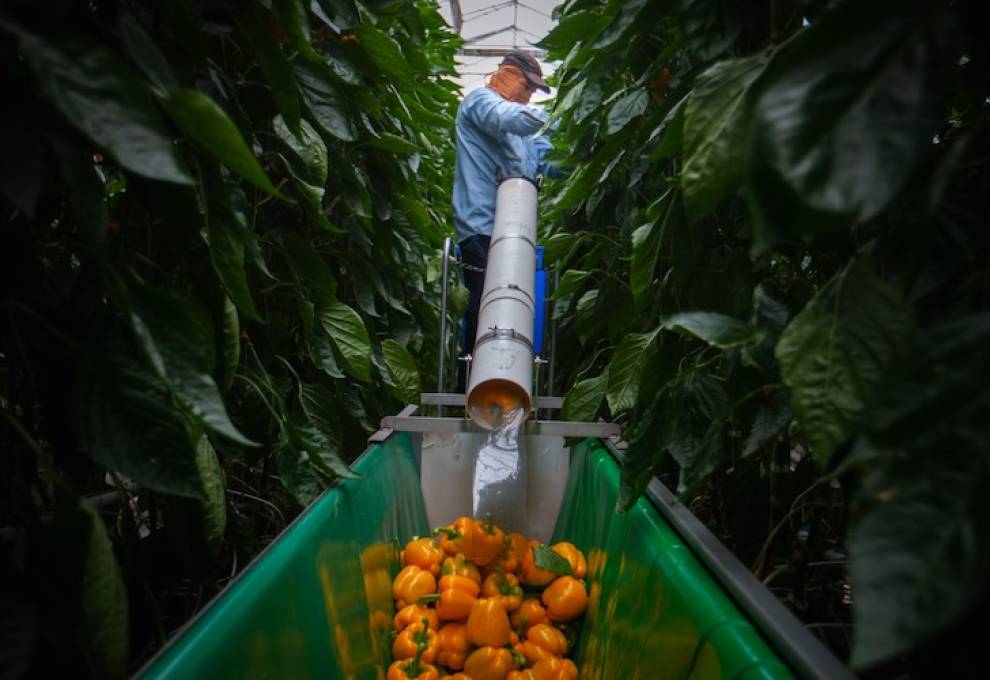
Controlled environment agriculture is on the upswing. Sales of produce raised indoors is rising, acreage is climbing, and the sector is rallying to deal with emerging challenges and opportunities – most lately, by launching a new trade show specifically serving the controlled environment agriculture (CEA) community.
The show, GreenTech North America 2026, opens its doors later this month in Philadelphia. At press time, 90 exhibitors and more than 1,000 attendees from around the world were expected.
Organizers see the show as a chance to establish a presence in the U.S. and Canada for what they call “Greentech’s promise as the worldwide connector of sustainable food and flower production,” with emphasis on high-value crops such as vegetables, soft fruits, ornamentals, leafy greens and medicinal plants.
New trade shows are a barometer for an industry’s health and a measure of its optimism…which might make some observers wonder about GreenTech 2026’s timing. However, even though trade talks are going sideways and the agri-food sector is exposed to Washington’s political whims, controlled environment growers and industry reps are part of a buoyant group that defies the headlines and continues to grow.
Industry veteran Tom Stenzel, executive director of the Controlled Environment Agriculture Alliance which will be participating in Greentech 2026, says integration has been an all-important driver in this sector.
“Most companies grow in Canada, the U.S. and Mexico to meet seasonal demand,” he says. “We count on our valued suppliers to share technologies and new business practices that can help the entire industry grow. Growers and our business service suppliers work together in all the alliance’s committees and working groups, and industry trade shows are where we can all see new opportunities for future growth.”
Good reason for confidence
Statistically, there’s good reason to feel confident about agriculture in controlled environments.
In its 2025 annual greenhouse, sod and nursery survey, Statistics Canada reported that sales at greenhouse, nursery, field-grown cut flower and sod operations increased 7.5 per cent to $6.5 billion, marking a fifth consecutive annual increase.
Greenhouse growers accounted for just over four-fifths of total sales, at $5.5 billion, driven by increased production of greenhouse fruits and vegetables and by higher prices.
Nationally, total greenhouse area increased by 1.4 per cent to 35.9 million square metres. Ontario accounted for almost 65 per cent of total greenhouse area, followed by British Columbia (17.4 per cent) and Québec (10.4 per cent).
Commodity wise, the survey showed greenhouse harvested area dedicated to strawberry production grew at the fastest pace in 2025, rising 45.5 per cent to 1.2 million square metres. Harvested area dedicated to lettuce (up 8.1 per cent), fine herbs (up 11.2 per cent) and Chinese vegetables (up 23 per cent) were the other major movers.
Tomatoes and cucumbers were the leading greenhouse export commodities from Canada to the United States in 2025. Cucumber exports increased 12.7 per cent to 290 million kilograms while tomato exports crept forward 0.5 per cent 231.7 million kilograms.
Stenzel believes indoor farming is well positioned to continue growth, in commodities such as tomatoes, leafy greens, strawberries and mushrooms. Today, most tomatoes at retail are already greenhouse grown. Packaged salads are up in the U.S. about eight per cent, with some 20 per cent market share in the northeast. Indoor strawberries are starting to emerge, and most modern mushroom farms are high-tech CEA facilities.
Risks arise despite progress
Despite all this progress, risk – other than political headbutting – is on the doorstep of every facility. Stenzel says challenges, such as the Tomato Brown Rugose Fruit Virus (ToBRFV) never go away.
“Zero risk is a myth and it’s really tough to prepare for something like an unexpected virus we haven’t seen before,” says Stenzel. For ToBRFV, the industry picked up the gauntlet. Today, most seed companies have bred varieties resistant to ToBRFV and are continuing to research emerging threats. Greenhouse growers can manage ToBRFV risk through strong management controls.
And he says players in the sector will keep working together, looking towards a political scene that ultimately complements and mirrors the sector’s upswing. The United States is Canada's primary export market, accounting for about 99 per cent of Canada's greenhouse export market. The sector needs to keep nurturing that relationship, while simultaneously exploring new markets.
But all things considered, controlled environment agriculture is still one of the best farm and food stories anywhere.
Standard (Image)
If latest news
Check if it is latest news (for "Latest News" page)
1 (Go to top of list)